The Epidemic of Hiding

Why We Hide, and What a Hummingbird Taught Me

It's raining, and the majestic mountains stand silhouetted by clouds and fog. Rain falls lightly, nourishing the dry earth. My forest family surrounds me. My home holds me comfortably. I am safe. I am loved. I am supported. I am protected.

My mind worries anyway.

Annie Dillard said, "The world unraveled from reason." I believe it. I live it. Moment to moment, my world unravels as I analyze, judge, worry, predict, anticipate, and imagine the worst—even when I'm perfectly safe in this moment.

All this overthinking keeps me from acting, from creating. It consumes my energy and slips me into paralysis. I want to shut my eyes to it all, and I do. Like a child playing hide-and-seek: if I can't see them, they won't be able to see me.

The Ache of Remaining Unseen

It's not safe to be seen. Worse yet, I'll reveal myself and still not be seen. Better the pain of hiding than discovering no one wants to see me. That would be devastating—or so a part of me believes. Like the quick of a fingernail bed with no protection. Just save myself from that pain by not revealing anything. Stay hidden. It's safer that way.

I wonder how many feel this? I suspect countless do. I see the magazine smiles pasted on people's faces and their perfectly curated social media accounts. I see the pain behind their eyes. I feel their guarded hearts. I can almost see the wild machinations of their minds. I suspect I see so clearly because of my own experience of it.

Most everyone I encounter is heavily guarded. No wonder we live in an epidemic of loneliness. We've become excruciatingly disconnected and separate. We try all manner of things to fill the void left by our disconnection—chasing money, success, legacy, power to utter exhaustion and dissatisfaction. Alcohol, food, sex, drugs, endless consumption. Nothing satisfies. Everything leaves us emptier.

In the entrepreneurial world where I work, there’s relentless pressure to optimize every aspect of life. My clients spend tens of thousands of dollars only to find they’re still unhappy underneath it all.

I was reflecting on this pattern when a teacher appeared.

When the Hummingbird Appeared
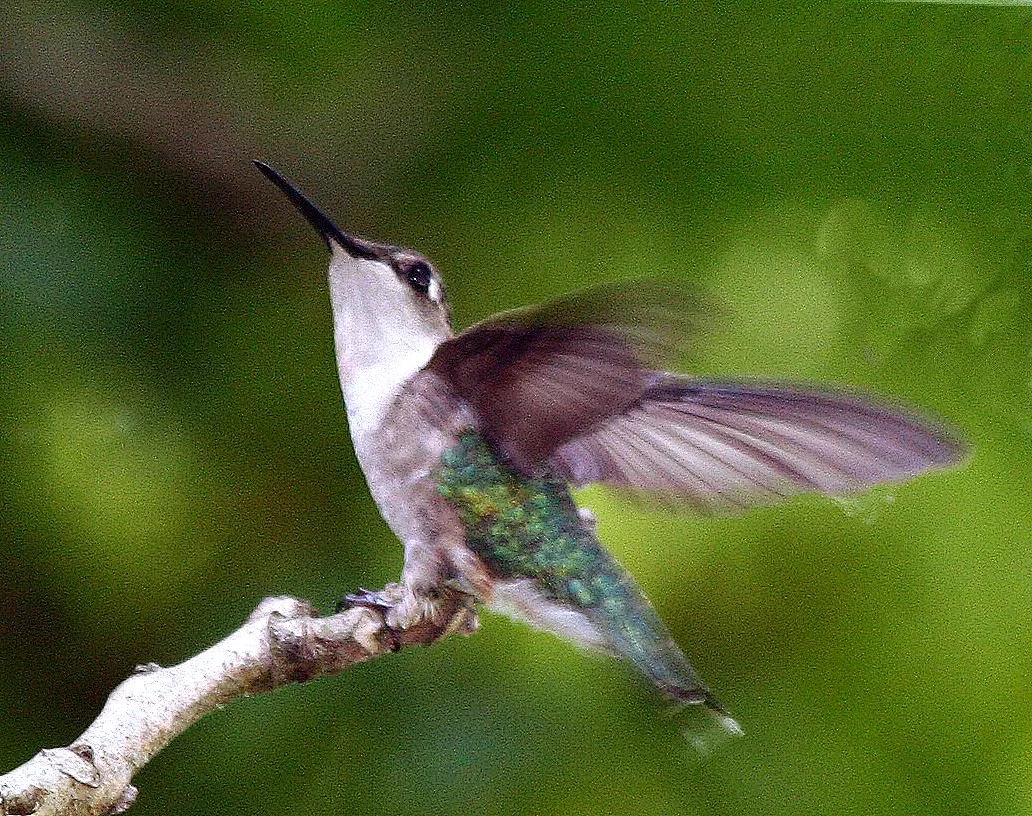
I live surrounded by mountain forest on three sides and a mountain vista in front. For three days, while sitting on my front porch each morning, a tiny hummingbird has come right up to my face, asking for food. Day after day, she shows herself to me and asks.

I hadn't hung my hummingbird feeder because this forest is full of bears, and I don't want to attract them to my house. But this little hummingbird demanded to be seen. No shame, no guilt, no hiding, no pretense, no overanalyzing. Just simply showing herself and asking for what she needs. Asking me to partner with her.

So I decided to fill my hummingbird feeder, set it out during the day, and bring it in at night.

In return, she offers me her incredible beauty, courage, strength, tenacity, resilience, and resourcefulness. I learn from her. She's preparing for her great journey south across the Gulf of Mexico. I want to help. And she wants to share her beauty and help me learn—learn how to be seen, learn to ask for what I need, learn to offer the beauty I have.

I can't express my delight in her presence. So tiny! Finding her way through a difficult world with such grace and beauty! She exemplifies the good, the true, and the beautiful. She is nothing but herself, fully, completely, shamelessly. She doesn't apologize for who she is, what she needs, or what she has to offer.

Why should I? Why should you?

Her unapologetic presence makes me think of what we've lost.

The Grotesque Demand for Conformity

Michael Pollan said, "Nature is busy creating absolutely unique individuals, whereas culture has invented a single mold to which all must conform. It is grotesque."

It is grotesque. I want to revolt. In many ways, I have revolted. I've gone against the grain of what my family, religion, and culture expected and even demanded. I'm freer and happier as a result, but it's difficult. We all want to belong, and when this culture tells us belonging looks one certain way, it's hard to resist. It can feel easier to hide our true selves.

But is it easier? Is it not soul-sucking? Empty? Despairing at times? "Is this all there is to life?" That's often the question my successful clients ask, even when they have everything this culture claims they need to be happy.

This culture's promises are hollow. Deadening.

But there's something else available to us.

What We Actually Need

We need connection. Connection with ourselves, with one another, with this beautiful Earth, with the Great Mystery—what some call God, others call the Ground of Being, Source, the Universe.

We need the courage to show ourselves. To reveal ourselves honestly, compassionately. To witness one another graciously with a desire to understand rather than judge. To see Earth again in all her beauty and acknowledge the damage we've done. To approach the Great Mystery again with curiosity and openness.

We need the courage of the hummingbird. The willingness to show ourselves without apology. To ask for what we need without shame. To offer what we have without pretense.

The hummingbird doesn't wonder if she's worthy of food. She doesn't analyze whether I might reject her. She doesn't hide her hunger or her beauty or her need. She simply is, fully present to this moment, trusting that what she needs will be provided.

The Risk and Gift of Being Seen

What would change if we approached our lives with this same shameless presence? If we stopped hiding behind our carefully constructed personas and showed up as we are—flawed, beautiful, needy, generous human beings?

So many spend enormous energy maintaining facades of having it all together. They optimize their schedules, their diets, their productivity systems, but they won't risk the vulnerability of being truly seen — understandably given what this culture demands. They've confused performance with presence, achievement with aliveness.

But the hummingbird knows something our culture has made us forget: you can't receive what you need if you won't reveal who you are.

“You can’t receive what you need if you won’t reveal who you are.”

This doesn't mean broadcasting every thought or feeling. It means showing up authentically in your relationships, your work, your creative expression. It means trusting that your true self—not your polished version—is what the world needs.

Every morning now, I sit with my coffee and wait for her. She comes, feeds, hovers near my face for a moment as if to say thank you, then flies away to prepare for her impossible journey. She reminds me that being seen isn't just about receiving—it's about offering the gift of our authentic presence to a world starving for real connection.

What if the very thing we're afraid to reveal is exactly what someone else needs to see? What if our vulnerability gives others permission to be vulnerable? What if our authentic presence is the antidote to the epidemic of loneliness plaguing our culture?

The hummingbird will soon leave for her journey across the Gulf. But her lesson remains: show yourself, ask for what you need, offer what you have. Trust that there's room in this world for exactly who you are.

Because there is. There always has been.

“Show yourself, ask for what you need, offer what you have.”

False Fires: When hyperfocus becomes compulsion, urgency feels like purpose. But your body knows better.

It didn't feel like urgency at first. It felt like inspiration and aliveness.

That electric pull when an idea grabs you and won't let go. I sat down to solve one small sound issue with an audio I was creating. Just a quick fix, I told myself. Hours dissolved. Then days. Little Lucy would worm her way beneath my arm, head emerging, looking up at me, the only thing that could break the spell. Only then would I notice my hips aching from sitting too long, the hot flashes from overriding my body's signals, the way I'd forgotten to eat regularly and move.

This is hyperfocus. For those of us wired this way, it's both a superpower and a trap. Everything else falls away. The world narrows to this one thing that feels so important, so urgent, so close to being solved. Just one more tweak. One more attempt. One more hour.

But my body knew better. It kept whispering: This doesn't need to be finished today. You can trust yourself to come back to this. You can step away, and it will still be here.

I ignored it. Because hyperfocus feels like purpose. It feels like you're finally doing what matters. Until you realize you've been chasing a ghost.

When Flow Becomes Flood

There's a difference between riding momentum and being swept away by it. I know this intellectually. I teach this to my clients. Yet here I was, day after day, believing the lie that if I just solved this one technical problem, everything else would fall into place.

The high-achievers I work with know this pattern intimately. They are visionaries, quick-starts, people who can see three moves ahead and feel the pull to make it real right now. They mistake the adrenaline rush of constant motion for productivity. They confuse the drug-like high of hyperfocus with being in flow.

But flow doesn't leave you depleted. Flow doesn't demand you sacrifice sleep, ignore your body, or abandon everything else that matters. Flow is sustainable. This other thing, this compulsive urgency masquerading as inspiration, burns through you like wildfire.

What's happening beneath the surface is a neurochemical hijacking. Hyperfocus floods the brain with dopamine, creating a reward cycle that can become genuinely addictive. Our nervous systems aren't designed for the chronic activation we've normalized in this culture. We're built to flood with stress hormones when there's a real threat - a mama bear with cubs in the forest, an actual emergency, as her priority is to protect her babies. I need to move away, and quickly. Then we're supposed to discharge that energy and return to baseline. Instead, we live in a state of manufactured crisis, treating every project deadline like a matter of life and death.

The Seduction of Now

The most insidious part isn't the physical cost, though that's real enough. It's how urgency hijacks our judgment. When I'm locked in that hyper-focused state, everything feels critical. The sound issue that's been nagging me becomes the one thing standing between me and success. The project that could wait becomes the project that must be finished tonight.

This is where trauma patterns masquerade as productivity. The nervous system, dysregulated from chronic stress, interprets any unfinished task as a threat. The mind creates elaborate stories about why this particular thing must be completed now, why waiting is dangerous, why stepping away means failure.

I see this with my clients constantly. One entrepreneur spent a solid year trying to fix something that needed to be let go of, convinced that if it had worked before, it would work again, and that changing course would be disastrous. By not pivoting sooner, he wasted a ton of money and energy.

I see them burning through weekends, chasing solutions to problems that aren't actually urgent. They'll sacrifice relationships, health, and perspective for the illusion of progress. They'll mistake exhaustion for dedication and call it success. All while this culture applauds them for their grinding.

When Urgency Is Real

True urgency exists, of course. When your child is hurt. When someone is attacking you. When the house is on fire. These moments demand immediate action, and our bodies know the difference. Real urgency has a clean quality to it - sharp, focused, temporary. It doesn't last for days or weeks. It doesn't require you to override your basic needs.

For visionaries and quick-starts, there's also the urgency of inspiration; those moments when an idea lands and momentum is everything. The difference is in how it feels in your body. Inspiration energizes. False urgency depletes.

Real urgency moves through you and resolves. False urgency becomes a loop, feeding on itself, creating the very stress it claims to be solving.

The Body Knows

My body tried to tell me. The tight shoulders. The shallow breathing. The way my eyes burned from staring at the screen too long. The sleep that wouldn't come because my mind was still racing with solutions.

When I override these signals, I know I'm out of alignment. When I ignore my dog's needs for attention. When I eat while working, when I tell myself I'll rest after this one thing is finished, these are red flags, not dedication.

The body doesn't lie. It knows the difference between sustainable engagement and compulsive pushing. It knows when we're running on stress hormones instead of genuine energy. It knows when we're using productivity as a drug to avoid sitting with what's actually here.

The Medicine

My antidotes are simple but not easy to implement when I'm in that hyperfocus, urgent mode. Walking in the forest with little Lucy. Stretching my body out of its computer-hunched position. Cooking a delicious meal and enjoying it undistracted on my porch. Drawing something with my hands instead of solving problems with my mind.

Lucy enjoying the forest. ©2025. Carla Royal.

The most radical medicine is trusting that it doesn't need to be finished today. That I can step away and return. That my worth isn't tied to how much I complete or how fast I solve things.

Some problems only resolve when you stop trying to force them. Some breakthroughs come in the shower, on a walk, in conversation with someone you love. The very thing you think you need to push through might be asking you to slow down.

The forest teaches this. Things grow in their own time. Seasons can't be rushed. What wants to emerge will emerge, but not on the timeline your urgency demands.

Your body knows this, too. It's been trying to tell you all along.


When Self-Reliance Becomes a Cage: The Hidden Cost of Going It Alone

I've always been extremely individualistic. This isn't the same as being independent—far from it. For much of my life, I was caught in a painful contradiction: knowing intellectually that nobody could "save" me, yet unconsciously hoping someone might. Meanwhile, I had a tendency to make it difficult for genuine support to reach me.

This paradox created a particular kind of suffering. I felt alone with burdens I couldn't carry, yet struggled to authentically receive the help that was sometimes offered. Outside of therapy—which I'd started at 25—I had convinced myself I had to figure everything else out on my own, while simultaneously feeling resentful when support didn't materialize in the way I wanted it.

This cost me dearly. Years of unnecessary struggle. Physical, emotional, and mental exhaustion from carrying weights never meant for one person. Opportunities missed because I was reluctant to reach out, connect, or simply ask.

Years of therapeutic work slowly transformed me. I began to understand the difference between healthy independence and destructive isolation. That inner transformation eventually allowed me to take other risks, like hesitantly joining a business mastermind in midlife, which profoundly changed my career trajectory. It also influenced my decision to finally put down roots. After moving up and down the East Coast for my entire adult life, I chose to settle where many of my friends had landed, recognizing my need for community.

I still value my autonomy, but I no longer carry the crushing weight of believing everything depends solely on me. The therapeutic work didn't just help me understand myself better—it fundamentally changed how I relate to others and to the possibility of genuine support.

This transformation showed me something crucial: what I had experienced as isolation wasn't a choice I was making from power, but a prison I was trapped in—one built from the belief that no one could truly show up for me in the way I needed. And this same pattern shows up everywhere in our culture.

The Internal Dialogue of Isolation

In my work, people describe their experience with strikingly similar language: "No one's got my back. It's all up to me. If I don't do it, it won't get done. I can't get it all done, but I can do it better than anyone else, so I just have to push through."

This isn't drive or ambition talking. This is a nervous system trapped in chronic activation, convinced that survival depends on doing everything alone. The consequences show up in their bodies, their relationships, and their capacity for clear thinking.

We live in a culture that worships this myth. The self-made individual. The person who pulls themselves up by their bootstraps. But research confirms what many of us feel daily: this approach is destroying us. It costs us our well-being, our relationships, our capacity for joy, and the collective toll is staggering.

When Your Body Stays in Crisis Mode

Our culture misses the point entirely: our bodies weren't designed for this level of chronic isolation and self-reliance. Stephen Porges's research reveals that our autonomic systems evolved for co-regulation—the ability to borrow calm from each other when our own systems are overwhelmed.

Before your conscious mind understands what's happening, your body has already assessed the situation through what Porges calls neuroception, an unconscious surveillance system scanning for safety or threat. When you're constantly operating in isolation, convinced you must handle everything yourself, your internal alarm system never truly settles. It stays in protection mode, scanning for dangers you'll have to face alone.

Your body gets stuck in chronic fight-or-flight activation. This leads to exhaustion, inflammation, rigid thinking, and emotional volatility. Your mind becomes narrow. Your creativity suffers. Your capacity for clear decision-making diminishes just when you need it most. What feels like autonomy is actually your system slowly burning itself out.

Research shows that daily stressors impair our ability to mentally and emotionally reset, which reduces our well-being the following day. It's a vicious cycle: the more overwhelmed we become, the less capable we are of stepping back or seeking support.

The Difference Between Toxic and Nourishing Connection

The costs of going it alone become clearer when we understand that not all connection is created equal. Here in western North Carolina, I watch two very different types of relationships play out in nature. There's kudzu—an invasive vine that grows aggressively, overwhelming and choking the life out of the trees it attaches to. But there's also native Virginia Creeper, which grows in partnership with trees, each supporting the other's growth without harm.

Virginia Creeper. © 2025. Carla Royal.

This distinction shows me something essential: too many of us have learned that all connections are like kudzu—invasive, draining, dangerous. So, we cut ourselves off entirely, convinced that isolation equals safety. But what we actually need is to learn the difference between toxic dependence and healthy interdependence, between relationships that suffocate and those that nourish.

The people who come to me aren't failing in conventional terms. Most are highly successful in their fields, with impressive achievements, recognition, and financial rewards. But they're burning out because their demands exceed their internal resources. Mental exhaustion compounds when they refuse to delegate or seek help.

I watch them achieve external success while destroying their health and relationships in the process. Their families suffer. Their teams suffer. They make poor decisions from a place of depletion and struggle with emotional regulation under pressure.

This isn't just about work. It shows up everywhere in our disconnected culture. People across all areas of life—whether building businesses, raising families, or pursuing meaningful work—carry this same burden. They withdraw from the very people who could provide support, creating exactly the isolation they fear.

What Becomes Possible When We're Not Alone

Healthy interdependence doesn't diminish our autonomy. Instead, it creates what researchers call a foundation for collaboration. When we feel genuinely safe in connection with others, our bodies can focus on growth, restoration, and creativity. We gain access to higher brain functions that enhance learning and innovation, capacities that become unavailable when we're stuck in survival mode.

Social interaction functions as a biological regulator, optimizing our emotional and physical state. We're mammals. We evolved to derive biological benefit from relationships. Fighting this design doesn't make us more capable, it makes us sick.

The most effective people I know aren't the ones who never need help. They're the ones who've built robust networks of mutual support and learned to distinguish between healthy independence and destructive isolation. They understand that accepting help doesn't diminish their agency—it amplifies their capacity.

Taking the First Steps

You don't have to overhaul your entire approach overnight. Start by paying attention. Notice when you're carrying unnecessary weight alone. Pay attention to your body's signals when you're overwhelmed.

Ask yourself: what one area of your life could benefit from an outside perspective or collaboration? What fear keeps you from reaching out? Often, it's not the fear of being rejected, but the deeper fear of being seen as anything less than completely self-sufficient.

Practice regulating your system through connection. When you're stressed, instead of isolating, reach out to one trusted person. Notice how your body responds to genuine care.

The goal isn't to become dependent on others for your sense of self or security. It's to recognize that we're wired for relationship, and that isolation, while sometimes necessary, is meant to be temporary, not a permanent way of operating.

The Paradox of True Independence

Those who truly change the world don't do it alone. They build from a foundation of genuine collaboration and mutual support, allowing their nervous systems to settle enough for real innovation and growth to emerge.

Your independence is valuable, but it doesn't require you to carry everything alone. The most autonomous thing you can do might be recognizing when you need help and having the courage to reach for it.

I spent decades learning this slowly through therapeutic work. The shift didn't happen overnight, but it changed everything: my work, my relationships, my capacity to show up fully in the world. What I had thought was necessary self-reliance was actually limiting my potential. Learning to accept support opened up possibilities I hadn't imagined.

I had created isolation from old patterns for so long that it felt like the only safe option. I had forgotten there were other ways to be. Real freedom isn't the absence of connection; it's the ability to choose when and how to connect from a place of wholeness rather than desperation or fear.

You don't have to take as long as I did to discover this. Your greatest capacity might lie not in what you can carry alone, but in recognizing that some loads were never meant to be carried by one person. The willingness to share them, to invite others into your challenges, is where growth begins.

The Parts of You You’ve Rejected Hold the Power You’re Looking For

What Happens When You Stop Fixing Yourself and Start Listening Instead

I used to be a terrible procrastinator who couldn't get started on projects until the deadline loomed dangerously close. I tried everything—planners, productivity systems, accountability partners, even bribing myself. Nothing worked. I'd still find myself in the final hours before a deadline, heart racing, fingers flying, cranking out what needed to be done.

All the while, a relentless inner critic would narrate my apparent failure: "Why can't you just start earlier like normal people? What's wrong with you? You're going to crash and burn one of these days."

Then, several years back, I took the Kolbe Index, which measures our instinctive ways of taking action. My results showed I'm a 9 on Quickstart. In other words, I'm wired to wait and then race the clock. That's not a weakness—it's a superpower!

I’m still a procrastinator, but that simple shift in perspective from weakness to superpower changed everything for me. The energy I'd been using to fight against myself was now channeled into creativity. I'd been rejecting a fundamental aspect of how I'm designed to work in this world. Once I embraced it instead, everything shifted.

The Parts We Push Away

We all do this. We take certain qualities within ourselves and label them as unacceptable. Maybe it's the part that needs deep solitude in a world that celebrates constant connection. Maybe it's the sensitivity that feels emotions intensely in a culture that values stoicism. Maybe it's the wildness that wants to create when the pressure is on, rather than planning everything out neatly in advance.

Whatever those rejected parts are, they don't disappear when we disown them. They go underground. They operate outside our awareness, often sabotaging the very goals we're trying to achieve. All while draining our energy through the constant effort of pushing them away.

This inner war is exhausting. And unnecessary.

Many of the high-performance entrepreneurs I work with struggle with this same pattern. One client felt deep shame about taking risks that others labeled "too big." When a big risk didn't pay off, he'd wrestle with crushing self-doubt. People around him reinforced the idea that something was wrong with his approach. His body would contract, his breath would shallow—all the physiological signs of a nervous system in protection mode.

What I pointed out was simple: This is who you are! This risk-taking nature is precisely why you've created so much value in the world and achieved remarkable success. Yes, when you take big risks, the fall is further if things don't work out. But when they do, the gains are immeasurable.

This level of risk isn't for everyone, nor should it be. Different people are wired to work in different ways. For him, though, it's natural—even necessary. He has the remarkable resilience to absorb setbacks, learn from them, and create something even better. Now, without the shame of being a risk-taker, he moves with more confidence and clarity, embracing this core aspect of his nature rather than fighting it.

The Shadow's Hidden Medicine

What if the qualities we reject often hold essential wisdom and strength? What if the very aspects of ourselves we've been taught to hide or fix are actually keys to our most authentic expression?

I think of the forest behind my home. The decaying matter on the forest floor—what appears to be death and breakdown—is precisely what nourishes new growth. Nothing is wasted. Everything serves the whole.

Common blue violet. © 2025 Carla Royal.

Our inner landscapes work the same way. The parts we label as weaknesses often contain hidden gifts. Our sensitivity might enable deeper empathy. Our intensity might fuel our greatest creations. Our need for solitude might protect our most original thinking.

We're so quick to clean everything up, to get rid of what's ugly or awkward. We want things neat and tidy, even when we're falling apart inside. We don't trust decay. We forget that decay feeds the soil.

The shadow isn't only about negative qualities, either. Sometimes we reject positive aspects of ourselves because they weren't safe to express in our families or communities. Maybe your boldness was labeled as arrogance. Maybe your joy was dismissed as frivolity. Maybe your intuition was dismissed as irrational.

When we reconcile with these disowned parts, we don't just reduce suffering—we reclaim energy and capacity that's been locked away. We become more whole.

The Body Never Lies

I notice it first in the body—a tightness in the throat, a knot in the stomach when someone displays a quality we've rejected in ourselves. That flash of judgment that feels disproportionate to the situation. "Why can't he just make a decision already?" or "Her constant optimism is so irritating."

These reactions are gold. They're signposts pointing directly to our own disowned parts. The body knows before the mind catches up.

Carl Jung said that what irks us in others might be carrying a shadow message for us. The qualities that trigger us most intensely are usually aspects of ourselves we've tried to bury or deny. Our judgment is a spotlight, highlighting exactly what needs attention and integration.

One entrepreneur I work with couldn't stand "indecisive people." He prided himself on making quick decisions and moving fast. Yet he found himself increasingly stuck when facing complex strategic choices for his growing business. As we explored his frustration with others' indecisiveness, he recognized that he'd rejected his own contemplative nature in his drive to be the decisive leader.

His decision-making improved when he began to make space for reflection, even short periods of stepping back from action. His irritation with others' deliberative processes diminished because he was no longer at war with that quality within himself.

The Cost of Rejection

Think about how much energy it takes to constantly push away parts of yourself.

I see this with the high-achieving entrepreneurs I work with. They're exhausted not just from their demanding businesses, but from the constant vigilance required to maintain their carefully constructed identities. Always needing to appear confident when they feel uncertain. Always needing to seem in control when they feel overwhelmed. And it’s not just entrepreneurs. Take a look around.

As a teenager, I played this ridiculous game at summer camp. Two teams in a lake, wrestling with a greased watermelon. The goal was to get it to the opposite shore, but the strategy always involved trying to push it underwater, out of sight from the other team. We'd duck down, arms wrapped around that impossible-to-grip melon, desperately trying to keep it hidden. But no matter how strong you were, that watermelon would eventually slip free, shooting up with surprising force, often bonking someone in the chin before being frantically grabbed by the opposing team.

That's what happens with the parts of ourselves we try to submerge. No matter how much energy we expend keeping them hidden, they're going to surface—often at the most inconvenient moments and in ways we can't control.

What these leaders don't realize is that vulnerability—that quality they work so hard to hide—might be the very thing that would deepen their leadership and connection with others. Their questions might spark more meaningful innovation than their answers. Their visible humanity might inspire more trust than their polished perfection.

The Journey of Integration

So, how do we begin to reclaim these disowned parts?

It starts with curiosity rather than judgment. When we notice ourselves having a strong reaction to something, we can get curious. "What's being triggered here? What part of myself am I seeing reflected that I've tried to push away?"

Sometimes, it helps to personify these qualities. I'll ask clients to imagine having a conversation with their procrastination, risk-aversion, or people-pleasing parts. "If this part could speak, what would it say? What is it trying to accomplish or protect?"

This approach often reveals surprising wisdom. The procrastinating part might be protecting creative flow. The risk-averse part might be trying to prevent repeating a painful past experience. The people-pleasing part might be ensuring connection and belonging.

When we approach these disowned qualities with curiosity instead of condemnation, they begin to transform. Not by disappearing, but by unburdening and finding their right place and proportion in our whole being.

The Freedom of Wholeness

The entrepreneurs I work with are discovering that the qualities they've rejected might be exactly what they need for their next evolution.

My risk-taking client still takes big swings that make others nervous. But without the weight of shame, he's more discerning about which risks to take. He's more resilient when they don't pan out. And when they do succeed, his innovations create ripples that benefit many.

There's a profound freedom in this reconciliation with our shadows. Not the freedom of escaping parts of ourselves, but the freedom of embracing all of who we are. The freedom of having all our energy available rather than tied up in internal conflict. The freedom to show up authentically rather than partially.

The forest doesn't reject the decay that feeds new growth. The sky doesn't banish the clouds that bring rain. The night doesn't fight the darkness that reveals the stars.

What if we, too, could welcome all of ourselves? What if the very qualities we've been rejecting hold gifts we've been seeking? What if wholeness isn't about fixing or removing parts of ourselves, but about allowing all parts to find their rightful place?

This isn't easy work. It asks us to question deeply held beliefs about who we should be and requires courage to face what we've kept in shadow. But on the other side of this reconciliation is a more spacious way of being—one where we waste less energy fighting ourselves and have more capacity for what truly matters.

So I'll ask you: What part of yourself have you been rejecting that might hold wisdom you need? What would change if you approached that disowned quality with curiosity rather than condemnation? What might emerge if you allowed all of yourself—messy, complicated, contradictory—to have a seat at the table? Not to run the meeting, mind you, but to be heard, to contribute their perspective. There's a spaciousness that comes when we can listen to all our parts while remaining grounded in our deeper wisdom.

The parts of yourself you've been taught to reject might hold exactly what you need for your next level of development. They might contain the missing elements not only for your own growth, but for the innovation and leadership our world desperately needs.

The Expanded Field: How Shifting Your Focus Creates Breakthrough Insights

My front porch is surrounded by forest behind and beside me, with ancient mountains before me. Now that spring has arrived in full glory, there's a cacophony of bird song each morning. The Merlin bird app, which I love, helps me identify these winged voices that fill the air around me.

This morning, I found myself trying so hard to hear one bird, I missed several others. Realizing this, I relaxed my eyes and ears so I could take in the beauty of all the bird song at once. I was overwhelmed by the bounty surrounding me. Black and White Warbler, Worm-Eating Warbler, Northern Cardinal, Tufted Titmouse, Brown Thrasher, Indigo Bunting, Bluebird, Carolina Wren, Blue Jay, American Crow, Blue-Gray Gnatcatcher, Wood Thrush, Ovenbird, Eastern Towhee, and more!

The forest is alive with voices I would have missed in my narrow pursuit of the single voice.

The Mountains before me and the Forest surrounding me. © 2025 Carla Royal.

The Tunnel Vision Trap

When we think of focus, we often default to tunnel vision—that narrowing that excludes everything but the target. So much of our culture celebrates this kind of laser focus. There's a time for this kind of seeing, but not as often as we believe.

I see my clients sometimes get so focused on a particular way of doing things that they become trapped, unable to pivot when necessary. They dig in, throwing more energy, focus, and money toward something that isn't working. They think it should work—in fact, it has in the past—but it no longer does. Now, they're locked in. Possibilities narrow. Creativity withers. The very tunnel vision that once drove their success becomes the thing that imprisons them.

This tunnel vision isn't just affecting individuals. Look at our politics, where we've reduced complex issues to simplistic talking points, or religious institutions clinging to rigid interpretations rather than embracing mystery. We're unable to see the complexity or the wider field of possibility.

But isn't laser focus necessary for achievement? In some contexts, yes. The problem isn't focus itself, but our inability to shift between focused and expanded awareness when appropriate. Like any tool, tunnel vision serves us until we forget it's just one way of seeing.

One of my clients became extremely successful using strategies that worked brilliantly for years. When things started falling apart, he couldn't figure out why. He got stressed and doubled down on what had worked before.

In our work together, I introduced the idea of living in the questions as expressed by Rilke. Though he was skeptical, he committed to not making any firm decisions for six months. As he opened his vision to the wider field, new ideas began to drop in. Rather than jumping on them as was his tendency before, he left them scattered to see which might take root.

After six months of living in the questions, it became clear to him that he had to go in a completely different direction with his business. Now, everyone who encounters what he's doing says it's brilliant and commends his courage in doing something no one has ever done in his industry.

This is what a relaxed, wide view can allow.

What Animals Remember That We've Forgotten

I think of the animals on the African savannah, grazing with relaxed awareness. They know the predators are in the bush. They aren't hiding. They aren't trembling. They are grazing.

They maintain relaxed bodies, eyes, and ears, taking in the entire field around them. They aren't in denial about the dangers. They trust the wisdom within their bodies. They trust they'll engage immediately if a predator leaps from the bush.

What I find most remarkable is how quickly they return to relaxed grazing after the chase. They shake off the adrenaline and continue grazing within minutes.

We don't shake it off.

These unresolved experiences live in our bodies, generating painful stories about why the danger came for us, what we did wrong, what they did wrong, and when we'll be threatened again. We tend to live in this state, locked in hyper vigilance, unable to return to rest. We've forgotten how to trust our bodies' natural wisdom to respond as needed.

Learning to Trust Again

My little dog-friend, Lucy, came to me after two years of trauma. Her eyes bulged from her head for months after she arrived. She lived in a hypervigilant state 24/7. She even had nightmares that continued for over a year.

Lucy Pecan. 7.5 lbs of canine goodness! © 2025 Carla Royal.

As we've connected more deeply and as she races through this forest day after day, feeling her little animal body again, she’s relaxing. The nightmares have vanished. The bulging eyes are rare. She still has moments of overreaction, but they are less and less as she experiences safe connection.

As she runs through these woods, her whole being shifts. Her eyes soften. She's no longer locked in that frantic scanning for the next threat. She takes in the whole forest now.

Our bodies work the same way. When we drop out of our racing minds and back into our bodies, something opens up. Our vision literally expands. We see more. The narrowed focus that once helped us survive gives way to a wider awareness that lets us truly live.

That's why safe connection matters so much. Stephen Porges' polyvagal theory shows us that our nervous systems attune to one another, constantly scanning for safety or danger. Similarly, research from interpersonal neurobiology reveals that our brains are literally wired to regulate with others. We can't regulate in complete isolation. That's not how we're created. We are social creatures.

I know how difficult this shift can be. We live in a world that celebrates the individual hustlers and grinders. We're bombarded with information from every direction. Our nervous systems are constantly on alert. The idea of relaxing our focus can feel terrifying when we've been conditioned to believe that constant vigilance is the only way to survive.

The Wisdom of Seeing Differently

I've found that relaxed, open focus gives me a greater sense of connection to myself, to others, and to the world around me. What I'm exploring in my own life, and what I invite my clients to explore, is finding the edge between focus and freedom. Not an undisciplined letting go, but a relaxed awareness that can respond to what's actually emerging rather than what we expect to find.

Try this: When you next feel stuck, take three deep breaths while softening your gaze to take in the periphery. Notice what's been just outside your attention. Or during a difficult conversation, relax your throat and belly while listening, creating space for what's being said beneath the words. With practice, these micro-practices can begin to shift your habitual patterns of attention.

It's about cultivating a presence that allows for both responsiveness and rest, like the animals on the savannah who can graze peacefully one moment and sprint for their lives the next.

The wonder is that this relaxed awareness often opens doors that remain closed to a narrow, intense focus. Our most meaningful insights come during periods of relaxed attention—when we're in the shower, taking a walk, or doing something unrelated to the problem at hand. The relaxed mind makes connections that the striving mind misses.

The Freedom of Relaxed Awareness

The world we're navigating is complex and constantly changing. The old maps no longer serve us. Our default is often to grip tighter to what we know. But what if the wisdom we need now isn't about seeing more clearly in the usual sense but about seeing with a softer gaze that takes in the whole rather than just the parts?

When I sit on my porch and listen to the birds, I'm practicing a different way of knowing. I'm remembering what it feels like to be part of something larger than my own striving mind. I'm reclaiming a birthright that belongs to all of us—the freedom to simply be while still moving with what life asks of us.

The next time you find yourself locked in tunnel vision, try relaxing your focus. Not abandoning it, but softening it. See what comes into view when you stop straining to see.

Listen for the symphony when you stop trying to isolate a single note. There might be wisdom waiting at the edge of your attention—wisdom you'll miss entirely if you remain too focused on what you think you're looking for.

Like Lucy shaking off her trauma and beginning to trust again, we can reclaim our capacity for relaxed awareness. We can remember how to move between focus and freedom, between action and rest. We can relearn what those animals on the savannah never forgot: that our bodies know how to be both alert and at ease, that we belong to each other, and that sometimes the wisest response is simply to graze in peace, trusting that we'll know what to do when the moment calls.

Where Real Growth Begins | The High Cost of Skipping the Dark—and Why Depth Is the New Power

I've been working in my garden. It's a terraced garden held by ancient rocks, the kind that have accumulated massive wisdom. When I first moved here, it was early autumn. The herbs were still wild and fragrant, the flowers hanging on. Then winter came, and everything died back. Stalks went dry, petals crisped. The whole thing turned a brittle brown. I waited.

I thought the beginning of spring meant time to clear. I was ready to strip away the mess. But not being a gardener (yet!), I called my sister. She told me to wait. "The bees are still sleeping under there," she said. "Some of those plants might return. The decay is protecting and nourishing them." She told me to give it at least another month. Let the rot stay awhile longer.

So, I waited.

This past weekend, I tended the garden. I removed enough of the old decay to make room for new growth, but left what still served a purpose. I moved through slowly and carefully. I noticed how the green was coming up through the brown. How life doesn't replace death—it emerges through it.

Drawf Crested Iris. © 2025 Carla Royal.

We're so quick to clean everything up. To get rid of what we think is ugly or awkward. We want things neat and tidy, even when we're falling apart inside. We don't trust decay. We forget that decay feeds the soil.

Real growth isn't neat and clean. It's tangled, dark, and slow. It happens underground. In the unseen. Roots deepen in the decay long before the crown appears.

This is the part most people avoid. I see it in high-achieving entrepreneurs and leaders, the kind I work with every day. They spend most of their energy on the crown of their achievements—visible, brilliant, impressive—and they attempt to avoid the decay and the roots that need that decay. They neglect them. Because roots aren't sexy. They're gnarly, twisted, covered in the old stories we'd rather not tell. But without them, everything topples.

When these leaders finally come to me, it's often because something has begun to shake. The crown has grown too heavy for shallow roots. Or life has handed them a storm that exposed what lies beneath. They're ready, finally, to tend to what they've avoided.

Quick-starts can build fast, but if they don't build deep, they don't last. One of my clients built an eight-figure coaching brand in under two years. Sleek brand. Endless content. Then the stress and overwhelm cracked him. He crumbled. Everything he hadn’t tended underground came calling. It wasn’t failure—it was a reckoning. In our sessions, he did the courageous work to attend to the decay. From the roots up.

Roots and Decay. Douglas Lake, Tennessee. © 2015 Carla Royal.

Everyone wants to be an expert now. A thought leader. Everyone wants the mic. But no one wants to sit in the dark long enough to know what they really think. Everything's speeding up. There's pressure to speak before you've listened. To share before you've integrated. To teach before you've learned.

So, we get hollow authority. Half-digested insight. Shiny strategies with little soul behind them.

Even my new washing machine is falling apart. It's four months old. The repair tech has come out four times already. She’s been doing this for twenty years. "They're not built to last anymore," she said. "It's all plastic and speed now." I could hear the frustration in her voice. Things used to be built differently. Built for care. Built to endure.

And it's not just machines. Our relationships, our businesses, our bodies—we've absorbed this rush. We've learned to optimize instead of metabolize.

The Hunger for Depth

But under the speed and urgency, I see people starving for depth.

They want something that holds. Something that doesn't break when the winds come. Something that doesn't collapse when no one's watching. They may not know how to name it, but they want roots. Real roots. Not a curated persona of wisdom, but the kind that comes from sitting with your own dark mess until it reveals its medicine.

This hunger isn't just a personal longing; it's a collective ache. I see it in my clients' eyes when they finally slow down enough to feel what's been calling to them. I hear it in private conversations, beneath the polished social media profiles and carefully curated articles and essays, where people confess to being exhausted by the endless, draining performance. The constant pressure to be visible, to be relevant, to be ahead.

And some are afraid to speak at all. They’ve been told not to share until it's perfect. So, they stall. They stay in the cave, not from a genuine commitment to mastery, but from raw fear of being seen mid-process. We forget there’s a sacred middle: not performance, not hiding, but honest, in-process offering. Contribution that’s still forming. Wisdom that still smells like soil.

What we're really longing for is substance. The kind that can only come through allowing ourselves to be humbled, broken open, and transformed. The kind that Francis Weller calls the "fertile dark." He writes about grief work as a necessary composting of our experience, a transformation that can't be rushed or optimized. He tells us, “Our task is to enter the ground of our grief and trust that something will emerge."

That something is substance. And it doesn't come quickly.

Our emotions need time to metabolize, just as our gardens need seasons to cycle through growth and decay. Lisa Feldman Barrett's research shows us that our emotions aren't just automatic reactions; they're intricate constructions our brains create from bodily sensations, past experiences, and cultural context. Integration takes time. That takes compost. We must give ourselves back to the earth of our own lives if we want to lead with anything that lasts.

Potentilla Canadensis. © 2025 Carla Royal.

The Balance of Speed and Depth

Of course, not all speed is hollow. Sometimes urgency is real. There are bills to pay, launches to meet, people depending on us. The world doesn't always pause so we can compost our pain. Sometimes we have to build while grieving, lead while unraveling, but perhaps not as often as we think.

But that's exactly why roots matter.

Because when the storm hits—and it will—it's not your polish that holds you steady. It's the unseen depth you build when no one is clapping. It's the inner scaffolding you grow in the quiet, in the mess, in the wait.

We live in a world that worships the visible: the metrics, the followers, the outward signs of success. But there's a wisdom in what lies beneath, in developing what Stephen Porges might describe as a well-regulated nervous system that can stay grounded even when external conditions signal threat. A sense of safety that comes from knowing who you are beyond the metrics. Something that can't be taken away by a bad review, a failed launch, or a shifting market.

Slowness isn't a luxury. It's a strategy for resilience.

You don't have to choose between motion and meaning. But if you're not careful, speed will steal your depth. And you won't even notice until the whole thing breaks.

This is the wisdom my garden is teaching me. That life emerges through death, not despite it. It is decay, essential decay, creating protection and nourishment for what is trying to be born. That patience—that much maligned virtue in our accelerated world—is the soil from which real strength grows.

The Leaders Who Last

The leaders who endure are not the ones who sanitize their struggles. They're the ones who sit with discomfort. Who let it teach them. Who let the grief have its full cycle. Who tend to their roots when no one is looking.

In a culture that prizes confidence over competence, that rewards the appearance of wisdom over its embodiment, simply admitting that growth takes time becomes a radical act. The bravest voices today aren't the ones with ready answers, but those who say, "I don't know yet" or "This is still forming."

So I'll ask you:

  • What challenges in your life might be serving as protection for something that's not yet ready to emerge?

  • What deserves your patient attention rather than your immediate action?

  • What are you trying to clean up too quickly that might actually need more time?

  • What would change if you invested as much energy in your roots as you do in what's visible?

The ones who journey through the depths and don't hurry toward the surface—they're the ones who develop true wisdom. The ones who don't just shine but stay. The ones who aren't afraid of their own dark places.

That's where genuine wisdom lives. Not in quick answers, but in patient questions. Not in rapid growth, but in what emerges after necessary decay. In the crown that rises only because the roots run deep.